But here’s what it could do.
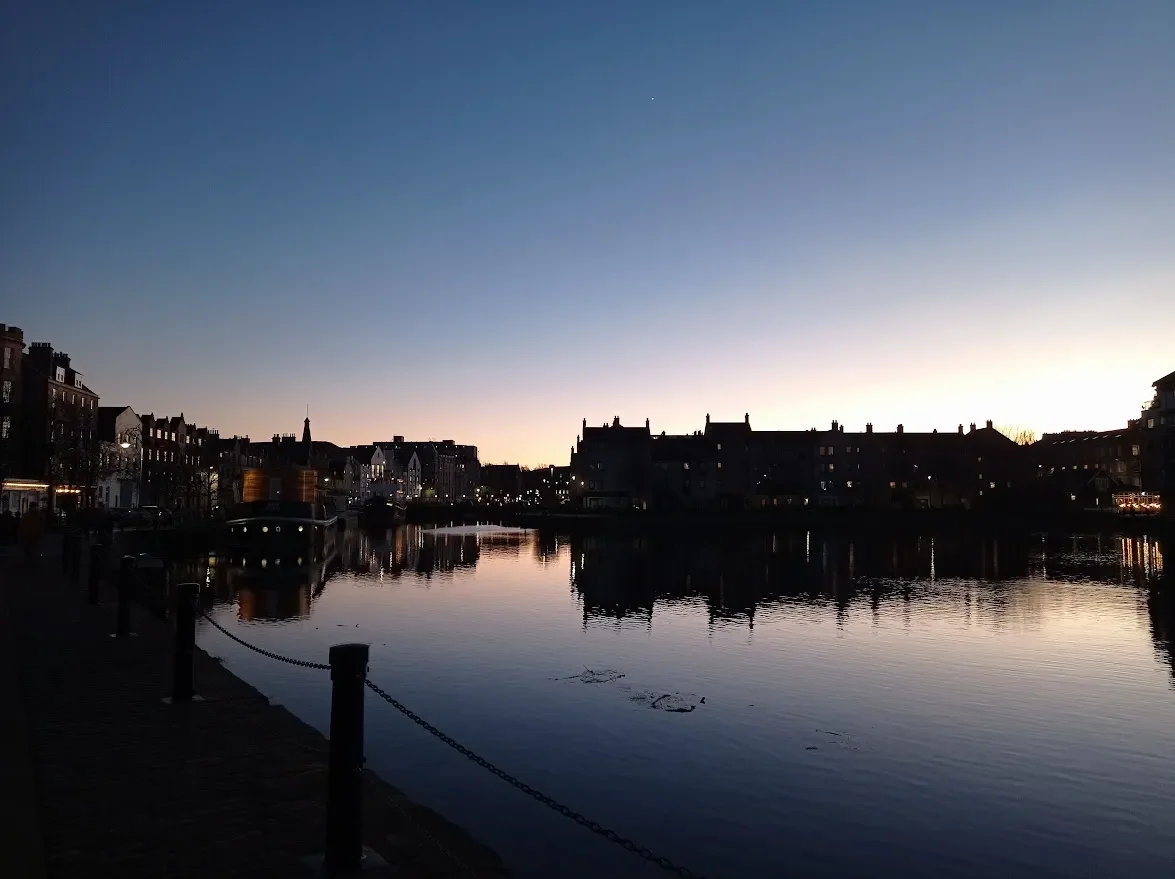
Leith, Edinburgh. 2025.
Retrouver l’article publié le 17 novembre 2025 sur Medium.
First of all, you already know it, but I haven’t solved all the problems life has thrown at me. Nobody has. However, here is what I learned from living in five different cities (and fourteen different places) in thirty-seven years.
The day I saw my first psychoanalyst for the last time, I was nearly twenty and was ready to move out from my parents’ house. He told me two things: if you leave, choose people you want to keep up with, and be the one who does it. They probably love you, but life is made in this way that they won’t do it; you won’t leave your problems behind you by leaving a place/city/country (and it also works with a job/friend/partner).
That’s probably the most useful and helpful thing I learnt in my entire life. From then on, I was forced to choose, and even if it was sometimes hard to do so, I was always happier after. I lost some friends in my day-to-day life, but I kept most of them in my heart. I found new friends, even after turning thirty, when it feels so hard to connect with new people.
I even found ways to connect again with some people I hadn’t seen for decades, just because I knew that I could and most importantly, that I had to if I wanted it to happen. And the funny thing is: most people are thriving in forgetting others but are really happy with finding them again.
The other day, my sister called me so excited. One of her friends from University had sent her a message about how she was missing her and their friendship. Probably a perfect example of midlife crisis, or “crise de la quarantaine” (literally “forty-year crisis”) as we say in French, but at the same time, the real way we should all act when it’s about relationships. Too often, we are putting lots of time and effort thinking about all the reasons we couldn’t or shouldn’t claim back an old friendship, even when we want to.
Actually, leaving was never of any help for the anxiety I have struggled with for most of my life. Having another frame can feel like a good idea, when you’re in a bad mood. But none of my moves has ever helped me, sometimes even deepening my struggles. When you move, you need to learn new rules, meet new people, find ways to integrate your current life into a new one. For all those reasons (and probably plenty of others), leaving is not really a good way to “sort your life”. On a brighter side, changing of place or city is a very good way to choose what really matters. Finally, you will be able to lose this toxic relationship that you felt stuck in or you will see how little you had in common with your former colleagues. It’s not all black and white, and you have an opportunity to choose. Not to say that it’s always perfect, because sometimes distance will create false impressions or misunderstanding, but you can take it as an opportunity to analyse your feelings.
But how can we manage to do the best with this new situation?
If “taking back control” was such a good slogan for the Brexit campaign, it’s because it’s a motto that says all we want without doing it. Leaving a place to another is not a way to solve problems, except that it can genuinely help. As I said earlier, it’s an opportunity to take the time to analyse your former relationships and understand what you like or not.
Just like the Brexit slogan promised control without the hard work of actual change, we often fantasize about moving as a magic solution — wanting the transformation without the effort.
When you arrive in a new place, you have more time to choose how you want it to reflect the situation you are in your life. It’s the good moment to try and test, to assess your past life (not in a creepy way, but just because we don’t have that much opportunities to do so in life). And it helps with anxiety or stress if you’re crippled by it the way I do.
When I was a kid or even a teenager, I never dreamed about living abroad. I struggled with foreign languages I learned at school, either English or German. I had to wait until my Master’s degree to find a teacher that made me understand why I could/should learn English. It took a few more years and being in love to trust I could do it.
I have now lived in the UK, in Scotland, for more than five years. My son was born in Edinburgh and my daily life is largely in English. Am I able to speak in English? mostly. Do I still need help and do I still make not-so-understandable sentences? every day! Nevertheless, it gave me a strength I wasn’t aware of. So, sometimes, leaving is good and gives you what you need to solve some problems about your sense of purpose.
Living in a new place is really a good opportunity to learn about yourself, learn new skills, be more confident about your abilities. To do so, you have to find the courage to do new things, meet people and try. Since I have lived in Scotland, I tried to paint (even though only a few times, I really liked it), I learned to code in Python and to use SQL or Tableau to practice data analysis, to use artificial intelligence on a daily basis, or to be more confident when speaking in public.
Part of my work is still ongoing (and launching this on Medium is a big part of what I want now to work on), but even if moving from one place to another — even to another country with a different language — doesn’t solve all my issues, I love the opportunities it has given to me: opportunities to meet new friends, learn new skills, discover new hobbies; and reconnect with old ones.
So, was moving to a new place the solution to all my problems? No. But it was the catalyst that forced me to choose what mattered, develop new strengths, and take ownership of my life in ways I never would have otherwise. And sometimes, that’s exactly what we need — not a solution, but an opportunity.
